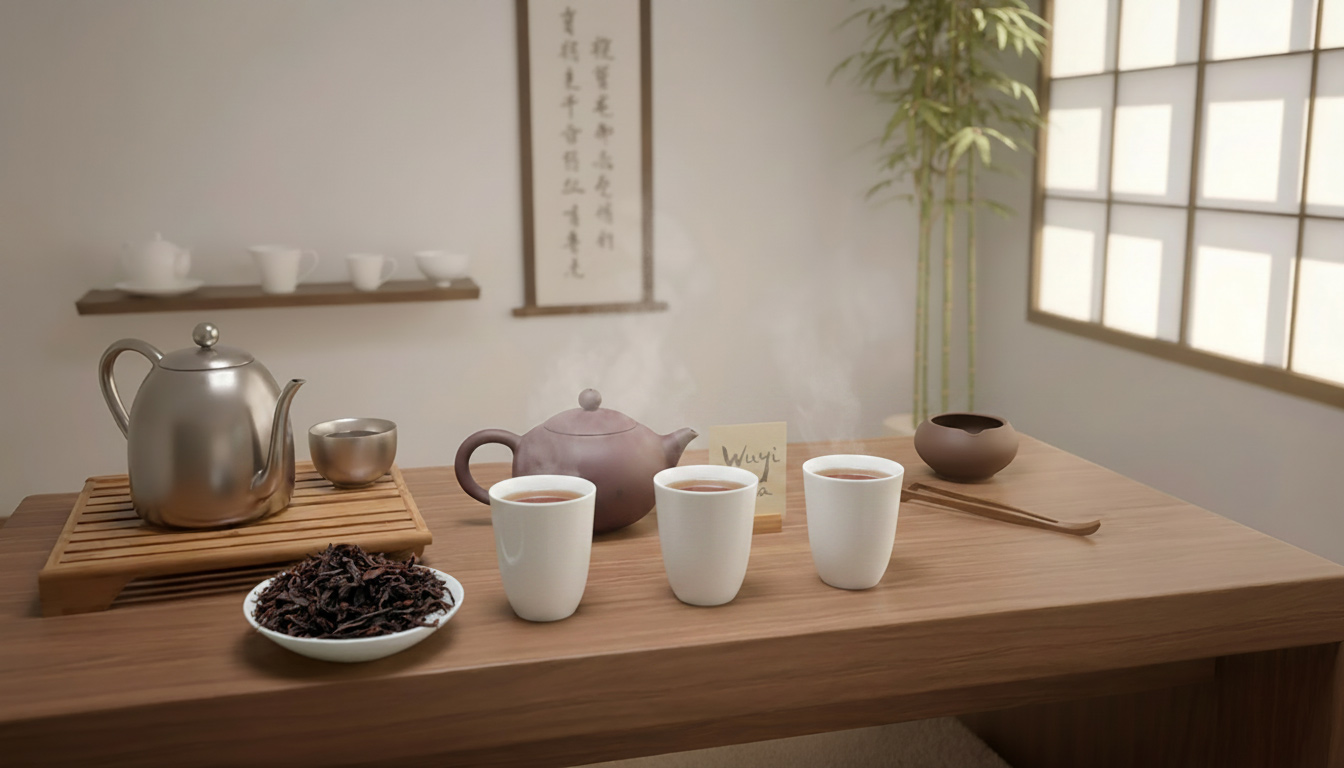
is wuyi tea a kind of oolong

Yes, Wuyi tea is a type of oolong.
Often referred to as Wuyi Rock Tea (or Yancha), it is a highly prized category of heavily roasted oolong tea grown exclusively in the Wuyi Mountains of northern Fujian Province, China.
What Makes Wuyi Oolongs Distinct
- The Terroir: The tea plants grow in the rocky, mineral-rich soil found in the cliffs and gorges of the Wuyi Mountains. This environment imparts a distinct, lingering mineral taste to the tea known as yan yun, or “rock rhyme.”
- The Processing: Wuyi oolongs undergo a complex, labor-intensive processing method. The long, dark leaves are twisted rather than rolled into balls, and they are traditionally subjected to a slow, heavy charcoal roasting process.
- The Flavor Profile: Unlike greener, lighter oolongs (like floral Tieguanyin), Wuyi oolongs brew into a dark amber liquor. They are known for deep, complex flavor profiles featuring notes of roasted nuts, caramel, dark chocolate, baked stone fruits, and a subtle floral or smoky finish.
Some of the most famous and sought-after Wuyi oolongs include Da Hong Pao (Big Red Robe), Rou Gui (Cassia), and Shui Xian (Narcissus).
is Da Hong Pao other name for Golden Monkey tea?
No, Da Hong Pao and Golden Monkey are two completely different types of tea. They differ significantly in how they are processed, their flavor profiles, and their visual appearance.
Here is a quick breakdown of how they compare:
| Feature | Da Hong Pao (大红袍) | Golden Monkey (金猴) |
| Tea Type | Oolong (Wuyi Rock Tea) | Black Tea |
| Oxidation | Moderate to heavy (roasted) | Fully oxidized |
| Leaf Appearance | Dark, long, twisted, wiry leaves | Curled, wiry leaves heavily flecked with fuzzy golden buds |
| Flavor Profile | Mineral, roasted, woody, complex | Sweet, malty, smooth, honey, cocoa |
Da Hong Pao (Big Red Robe)
This is a legendary Oolong tea from the Wuyi Mountains in Fujian, China. It falls under the category of Yancha, or “rock tea,” famous for growing in mineral-rich, rocky soil.
- The Profile: It undergoes heavy roasting over charcoal, giving it a deep, complex, woody, and slightly floral flavor with a lingering mineral finish often referred to as “rock rhythm” (yan yun).
- Brewing: Because of the tight twist and heavy roast, this tea shines when pushed hard with fully boiling water (212°F / 100°C). It is traditionally prepared in a dedicated Yixing clay teapot—which absorbs and enhances those deep roasted oils over time—or a porcelain Gaiwan using quick, successive steeps.
Golden Monkey (Jin Hou)
This is a premium Black tea (known as red tea in China), historically hailing from the Fujian province (like Panyang Congou) or sometimes Yunnan. The name comes from the tea’s appearance: the fuzzy golden buds resemble monkey claws.
- The Profile: Golden Monkey is prized for having almost zero astringency. The high proportion of young buds gives it a very smooth, sweet, and malty body with distinct notes of cocoa, honey, and baked fruit.
- Brewing: Unlike a hearty rock oolong, the delicate golden tips in this black tea can easily be scalded. It performs beautifully in a Gaiwan when steeped slightly off the boil, around 195°F–205°F (90°C–96°C), allowing the natural sweetness and cocoa notes to unfurl without pulling out bitterness.
If you have ever confused Da Hong Pao with Golden Monkey (Jin Hao), you are not alone. It is not just a trick of your mind; the confusion comes from a combination of overlapping liquor colors, shared leaf traits after brewing, vague tea terminology, and widespread internet mislabeling.
| Feature | Da Hong Pao (大红袍) | Golden Monkey (金毫 / 金猴) |
| Tea Category | Wuyi Rock Oolong (Semi-oxidized, charcoal roasted) | Black Tea (Fully oxidized) |
| Dry Leaf Appearance | Dark, twisted, sturdy leaves; rarely downy | Wiry black leaves heavily flecked with silky golden buds |
| Liquor Color | Amber, deep orange-red, to dark reddish-brown | Bright golden-amber to glowing orange-red |
| Flavor Profile | Mineral “rock rhythm” (yan yun), charcoal, orchid, spice | Sweet, honeyed, malty, cocoa, baked stone fruit |
Why the Confusion Happens
- 1. Matching Brew Colors: When poured into a glass fairness cup, a medium-roasted Da Hong Pao and a high-grade Golden Monkey look almost identical—both casting a rich, glowing amber-red hue. Judging purely by sight makes them nearly indistinguishable.
- 2. Online Misinformation & Mislabeled Photos: E-commerce vendors routinely interchange product photos, using golden-amber tea liquor shots generically across both black and oolong listings. Export listings in Western markets frequently blur these categories further.
- 3. Vague Terminology:“Jin Hao” (Golden Tips/Trichomes) describes the fine golden fuzz on young tea buds; it is a descriptive trait, not an exclusive brand name. Because certain early-spring or blended Da Hong Pao lots also feature downy buds, buyers often assume any golden-speckled leaf must be Golden Monkey.
- 4. Similar Infused Leaf Color: Once steeped, heavily roasted Da Hong Pao leaves turn a coppery reddish-brown, closely resembling the fully oxidized, reddish-brown leaves of Golden Monkey.
The Role of Brewing Technique
Your brewing habits can accidentally bridge the gap between the two teas. If you steep Da Hong Pao for too long in a glass mug, the liquor darkens significantly and loses its nuanced, roasted floral top notes. What remains is a heavy, simple sweetness that closely mirrors the body of a strong black tea.
How to Tell Them Apart Instantly
- Inspect the Dry Leaves: Golden Monkey is covered in silky golden downy buds. Da Hong Pao consists of dark, roasted, twisted leaves without a heavy coat of fuzz.
- Check the Aroma: Da Hong Pao delivers a signature charcoal, mineral, and orchid fragrance (yan yun). Golden Monkey offers pure honey, caramel, and malt sweetness without any charcoal toast.
- Examine the Spent Leaves: Da Hong Pao leaves are thick, structured, and exhibit classic oolong “red edges” (hong bian). Golden Monkey spent leaves consist of soft, uniform, tender young buds.
Watch out for marketing names like “Jin Hao Da Hong Pao”—this is simply a vendor blend name for a bud-heavy rock tea, not an actual hybrid with Golden Monkey black tea.