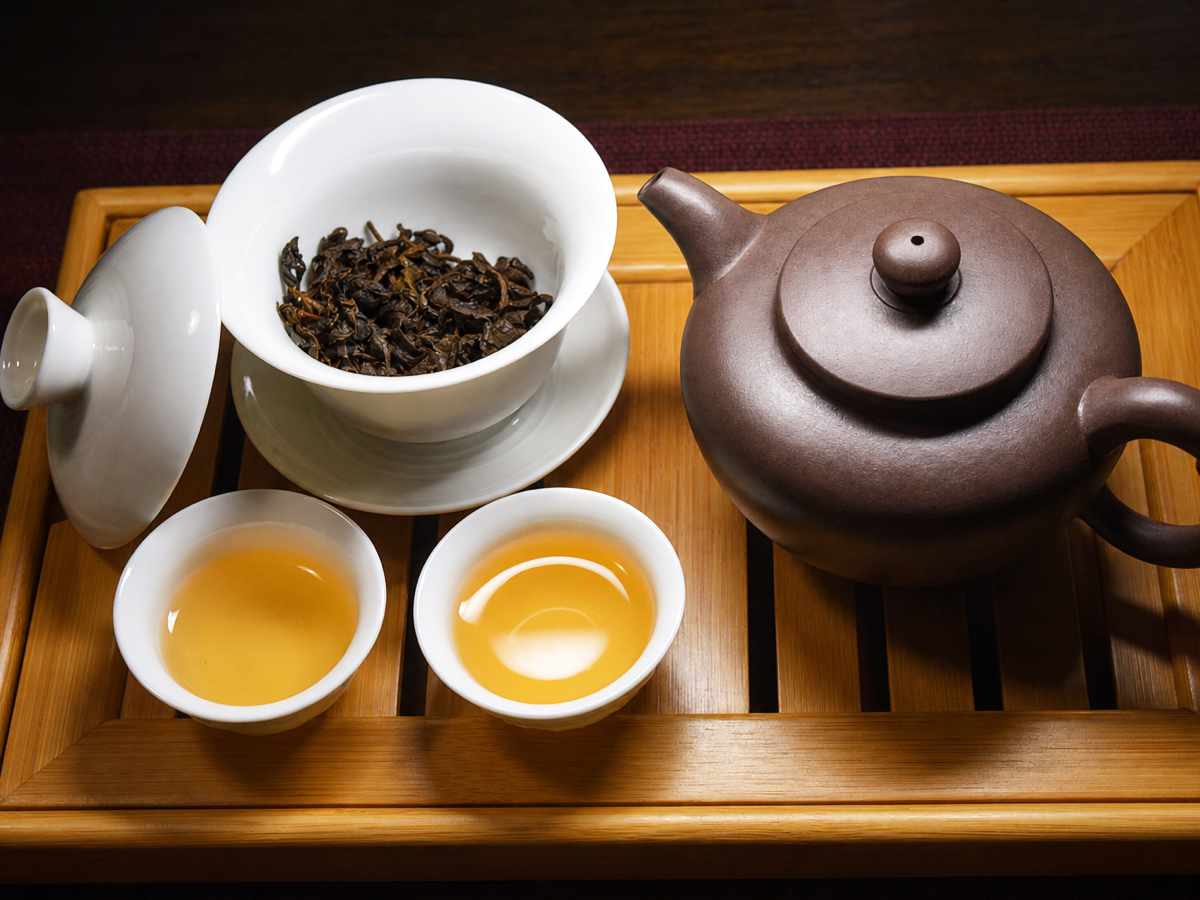
Gaiwan vs. Yixing Teapot: Key Brewing Differences

Gaiwan vs. Yixing Clay Teapot: Which Is Better for Brewing Tea?
A gaiwan and a Yixing clay teapot can produce noticeably different results from the same tea. The main reasons are their material, shape, heat retention, and the way each vessel interacts with aroma and flavor.
A gaiwan emphasizes clarity and faithfully reveals a tea’s character. A Yixing teapot tends to retain heat and gently round out the tea’s texture. Neither is universally better—the right choice depends on the tea and the experience you want from it.
1. The Fundamental Difference: Material and Structure
Gaiwan: Glazed and Non-Porous
Most gaiwans are made from glazed porcelain, including white porcelain and celadon. The glazed surface is dense and effectively non-porous, so it does not readily retain tea oils, aromas, or flavors.
A typical gaiwan also has thin walls and a relatively wide opening. This allows heat to dissipate quickly and makes it easy to observe the leaves, smell the aroma, and control the pour.
Yixing Teapot: Unglazed, Porous Clay
Authentic Yixing teapots are made from unglazed clay traditionally sourced from the Yixing region of China. The fired clay contains a fine pore structure and gradually interacts with tea oils and aromas through repeated use.
Compared with porcelain, Yixing clay may slightly soften sharper flavors while its thicker walls and enclosed shape help maintain a stable brewing temperature. The exact effect varies considerably with the clay, wall thickness, firing, shape, and craftsmanship of the pot.
2. Six Key Brewing Differences
1. Aroma
Gaiwan: Bright, clear, and expressive
Because glazed porcelain does not retain much aroma, a gaiwan presents a tea with minimal interference. Its open shape also makes it easy to appreciate fragrances released from the wet leaves and the underside of the lid.
This makes a gaiwan especially useful for aromatic and lightly processed teas, such as green tea, yellow tea, Silver Needle white tea, and lightly oxidized Tieguanyin. Floral, fruity, and fresh notes remain distinct and easy to identify.
Yixing teapot: Integrated, restrained, and lingering
An unglazed clay teapot may temper some of a tea’s highest aromatic notes while creating a more integrated overall impression. Instead of emphasizing fragrance above the cup, it often directs attention toward aroma within the liquor, texture, and aftertaste.
This can complement fuller or more mature teas, including aged white tea, pu-erh, roasted rock oolong, dark tea, and richer styles of black tea.
2. Texture and Flavor
Gaiwan: Transparent and revealing
A gaiwan gives a relatively neutral presentation of the tea. Freshness, sweetness, bitterness, astringency, and flaws are all easy to detect.
This makes it excellent for evaluating tea quality. It also means that overbrewing becomes obvious very quickly: if the infusion is too long or the water is too hot, bitterness and astringency will be fully exposed.
Yixing teapot: Rounded and full-bodied
A well-matched Yixing teapot can make the liquor feel smoother, warmer, and more cohesive. Its heat retention and porous, unglazed surface may soften some rough edges, although it cannot transform poor-quality tea into good tea.
The result often feels thicker and more settled, particularly with roasted, fermented, or aged teas.
3. Brewing Control and the Risk of Over-Steeping
Gaiwan: Fast and flexible
The gap between the lid and bowl allows the infusion to be poured out quickly. With practice, the leaves and liquor can be separated almost completely, giving the brewer precise control over steeping time.
This is valuable for delicate teas that benefit from short infusions. A gaiwan is also easy to adjust from one brew to the next. Its main drawback is heat: thin porcelain can become uncomfortable to hold if it is overfilled or handled incorrectly.
Yixing teapot: Dependent on design and pouring speed
A Yixing teapot’s performance depends heavily on its shape, size, filter, and water flow. A pot that pours slowly may continue steeping the leaves after the brewer begins to decant, increasing the risk of bitterness or an overly cooked flavor.
Smaller pots, thick walls, and slow-pouring designs require especially careful timing. Delicate green teas and lightly oxidized oolongs may lose some of their freshness if kept too hot for too long.
4. Seasoning and Flavor Carryover
Gaiwan: One vessel for almost any tea
Glazed porcelain is easy to clean and retains very little flavor. The same gaiwan can be used for green tea in the morning and ripe pu-erh later in the day without significant aroma transfer, provided it is cleaned properly.
For anyone who drinks many kinds of tea, a porcelain gaiwan is one of the most versatile brewing vessels available.
Yixing teapot: Often dedicated to a tea family
Over time, unglazed clay can retain traces of tea oils and aroma. For this reason, many tea drinkers dedicate a Yixing pot to one tea category—such as roasted yancha, ripe pu-erh, or aged raw pu-erh—rather than using it for dramatically different teas.
Strictly dedicating one pot to one exact tea is not always necessary. Grouping teas with similar aromatic and flavor profiles is often sufficient. Regular use may gradually develop a soft surface sheen known as baojiang, or patina.
Soap and strongly scented cleaning products are generally avoided because the unglazed clay may retain their fragrance.
5. Heat Retention and Extraction
Gaiwan: Faster heat loss
Thin porcelain and a broad opening allow a gaiwan to cool relatively quickly. This can help limit excessive extraction and preserve the fresh, lively character of delicate teas.
Its lower heat retention is particularly helpful when brewing green tea, fresh white tea, or lightly oxidized oolong.
Yixing teapot: Stable and sustained heat
Yixing teapots generally retain heat longer, especially when they have thick walls or compact shapes. Sustained heat can encourage deeper extraction from tightly rolled, heavily roasted, fermented, or aged leaves.
This quality often benefits rock oolong, ripe pu-erh, aged tea, and other styles that need high, stable temperatures to reveal their depth and texture.
6. Best Teas for Each Vessel
Teas commonly brewed well in a gaiwan
- Green tea
- Yellow tea
- Fresh white tea
- Lightly oxidized Tieguanyin
- Lightly roasted Phoenix Dancong
- Young raw pu-erh when freshness and aroma are the focus
- Teas being tasted or evaluated for quality
Teas commonly suited to a Yixing teapot
- Medium- or heavily roasted Wuyi rock oolong
- Aged white tea
- Aged raw pu-erh
- Ripe pu-erh
- Rich, traditional black tea
- Dark tea, including hei cha
These are guidelines rather than strict rules. The ideal vessel also depends on the teapot’s clay, shape, wall thickness, capacity, and pour speed—as well as the brewer’s technique and personal taste.
Gaiwan vs. Yixing Teapot: Quick Comparison
| Feature | Gaiwan | Yixing Clay Teapot |
|---|---|---|
| Surface | Glazed and non-porous | Unglazed and porous |
| Flavor presentation | Clear and neutral | Rounded and integrated |
| Aroma | Bright and easy to evaluate | More restrained and liquor-focused |
| Heat retention | Lower | Generally higher |
| Pouring control | Fast and highly adjustable | Depends on the pot’s design |
| Flavor carryover | Minimal | Possible with repeated use |
| Maintenance | Easy to clean | Avoid soap and scented cleaners |
| Versatility | Suitable for many tea types | Best when matched to a tea family |
| Best for | Delicate, aromatic, and evaluative brewing | Roasted, fermented, aged, and full-bodied teas |
The Difference in One Sentence
A gaiwan reveals a tea with clarity, while a Yixing teapot can shape the infusion by retaining heat and creating a rounder, more integrated texture.
Choose a gaiwan when you want transparency, bright aroma, quick pouring, and versatility. Choose a Yixing teapot when you want sustained heat, fuller texture, and a vessel dedicated to teas with compatible flavor profiles.
Ultimately, the best brewing vessel is the one that brings out the qualities you value most in your tea.
Gaiwan or Yixing? This Tea Reveals the Difference Instantly
Among Chinese teas, medium- to heavily roasted Wuyi rock tea—such as Da Hong Pao—often reveals one of the clearest contrasts between a porcelain gaiwan and a Yixing clay teapot.
Aged raw pu-erh can also change noticeably between vessels, but roasted rock tea is especially revealing. Its layered floral aroma, mineral character, roasted notes, and natural astringency give each vessel something different to emphasize.
The Same Rock Tea Brewed in a Gaiwan
1. An expressive aroma—with nothing concealed
A porcelain gaiwan presents the tea openly. Orchid, ripe fruit, toasted grain, charcoal, and roasted aromas rise clearly from the leaves, lid, and liquor. These aromatic layers often remain distinct rather than blending into a single impression.
The gaiwan also reveals imperfections. Excessive roast, smoky notes, dryness, bitterness, and astringency are easier to detect. If the infusion is poured only a few seconds late, a heavily roasted tea may quickly become sharp, dry, or slightly charred in character.
2. A structured liquor with clearly defined edges
In a gaiwan, rock tea can feel lively and multidimensional. Its roasted strength, mineral structure, light astringency, sweetness, and returning finish remain easy to distinguish.
This transparency makes the gaiwan valuable for evaluating leaf quality and roasting technique. For casual drinking, however, some people may find the result more intense or drying—particularly when the tea is recently roasted or brewed aggressively.
The Same Rock Tea Brewed in a Yixing Teapot
1. Less emphasis on the roast and more aroma within the liquor
A well-matched Yixing teapot often produces a more integrated aromatic profile. The highest floral notes may become less prominent above the cup, while the aroma experienced during drinking can feel deeper and more persistent.
Tea drinkers sometimes describe this as luo shui xiang—aroma that has “fallen into the water.” Instead of announcing itself immediately in the air, the fragrance appears within the liquor and continues through the finish.
The effect should not be understood as the clay literally filtering away every undesirable flavor. It is more likely the combined result of the pot’s unglazed surface, enclosed form, heat behavior, pouring characteristics, and seasoning from previous use.
2. A rounder and smoother texture
Compared with a gaiwan, a suitable Yixing pot may make the same rock tea feel softer and more cohesive. Light astringency can seem less pointed, while the roasted character may shift from dry or forceful toward warm charcoal, toasted grain, or baked fruit.
The tea’s “edges” have not disappeared, but they may feel less separated. This often creates a fuller, smoother drinking experience.
3. Greater depth in later infusions
Because a Yixing teapot generally maintains heat well, it can help roasted leaves continue to open through later rounds. The final infusions may feel fuller or more sustained than those from a rapidly cooling gaiwan.
This does not guarantee two or three additional infusions. Longevity depends primarily on leaf quality, roast, brewing ratio, water, temperature, and technique. The vessel may influence how evenly that remaining flavor is extracted and perceived.
Why Is the Difference So Noticeable with Rock Tea?
1. Roasting adds another dimension
Medium- and heavily roasted rock teas contain floral, fruity, mineral, and roasted characteristics at the same time. A gaiwan separates and exposes these layers, including any harshness or excessive roast. A Yixing teapot often presents them as a warmer, more unified whole.
Lightly processed teas do not contain the same tension between bright fragrance, roast, and texture, so the contrast between vessels may be less dramatic.
2. Rock tea has both richness and structure
Quality rock tea can contain abundant aromatic compounds, polyphenols, soluble sugars, and pectins. Sensorially, this creates a combination of fragrance, body, minerality, astringency, and returning sweetness.
The gaiwan highlights this structure with precision. The Yixing pot tends to emphasize integration, warmth, and texture. Because the two vessels favor such different aspects, their contrast becomes particularly easy to recognize.
3. Its aroma appears on several levels
Rock tea may offer fragrance from the dry leaves, the warmed leaves, the gaiwan lid, the liquor, and the finish after swallowing.
A gaiwan is especially effective at displaying the more volatile aromas that rise above the cup. A Yixing teapot may place greater emphasis on fragrance within the liquor and in the lingering aftertaste. The difference engages both smell and taste, making it more obvious than a change in texture alone.
Another Revealing Comparison: Aged Raw Pu-erh
Aged raw pu-erh is another good choice for comparing brewing vessels.
In a gaiwan, it may appear brighter and more forceful, with direct bitterness, quick returning sweetness, and a clearly expressed aged aroma.
In a Yixing teapot, the liquor may feel thicker and calmer, with less prominent bitterness and a deeper, more settled aged character.
The contrast can be substantial, although many drinkers find the difference most immediately recognizable with medium- or heavily roasted Wuyi rock tea.
Try This Side-by-Side Brewing Experiment
Choose an accessible medium-roast Da Hong Pao or another Wuyi rock tea. Use a porcelain gaiwan and an unglazed clay teapot with similar capacities.
Keep the following variables as consistent as possible:
- Use equal portions of the same tea.
- Use the same water and water temperature.
- Preheat both vessels.
- Use the same leaf-to-water ratio.
- Keep the infusion times similar.
- Decant both infusions completely.
- Taste from identical cups at comparable temperatures.
First, smell the lids and wet leaves. Then compare the aroma above each cup, the fragrance within the liquor, the texture, astringency, roasted character, returning sweetness, and finish.
The gaiwan will often give you the clearer and more analytical view of the tea. The Yixing teapot may offer the rounder and more integrated interpretation. This simple comparison demonstrates that a brewing vessel is not merely a container—it can meaningfully shape how we experience a tea.
Final Thoughts: There Is No Single Perfect Way to Brew Tea
There is no perfect—or only—way to brew tea. Different vessels and techniques reveal their own distinctive charm depending on the tea, the setting, and the moment.
A gaiwan seeks clarity and faithfully expresses the tea’s character; a Yixing teapot seeks softness, warmth, and harmony. Each has its strengths, and the better choice ultimately comes down to your habits and personal taste.
With patience and repeated practice, almost any vessel or brewing method can bring you closer to the cup of tea you find most satisfying.