Five Black Tea Cultures: Turkey, Russia, Iran, Britain & India

Black tea is enjoyed around the world, but the way it reaches the cup can be remarkably different from one country to another.
Turkish tea, Russian tea, Persian tea, English Breakfast, and Indian masala chai may all begin with black tea leaves, yet they represent five distinct tea traditions. The differences go far beyond the tea itself. Brewing equipment, water temperature, serving vessels, sweeteners, milk, spices, and even the social meaning of offering tea can change completely from one culture to the next.
Three traditions—Turkish, Russian, and Iranian tea—can look especially similar because they traditionally prepare a relatively strong tea and then adjust it with hot water. But a Turkish çaydanlık, a Russian samovar, and an Iranian tea setup belong to their own cultural traditions.
English Breakfast and Indian masala chai follow very different approaches again.
Here is an easy guide to five fascinating black tea cultures and what makes each one unique.
1. Turkish Tea: Çay
Tea is deeply woven into everyday life in Türkiye. It can be served with breakfast, during a business conversation, while visiting friends, or simply as an excuse to sit and talk.
The heart of Turkish tea production is the humid eastern Black Sea region, particularly Rize, which is widely regarded as Türkiye’s tea capital. Tea cultivation expanded significantly during the twentieth century, and today locally grown black tea plays a major role in Turkish tea culture.
The Tea
Traditional Turkish tea generally uses locally produced black tea from the Black Sea region. The desired result is usually a strong, deeply colored infusion capable of being diluted according to the drinker’s preference.
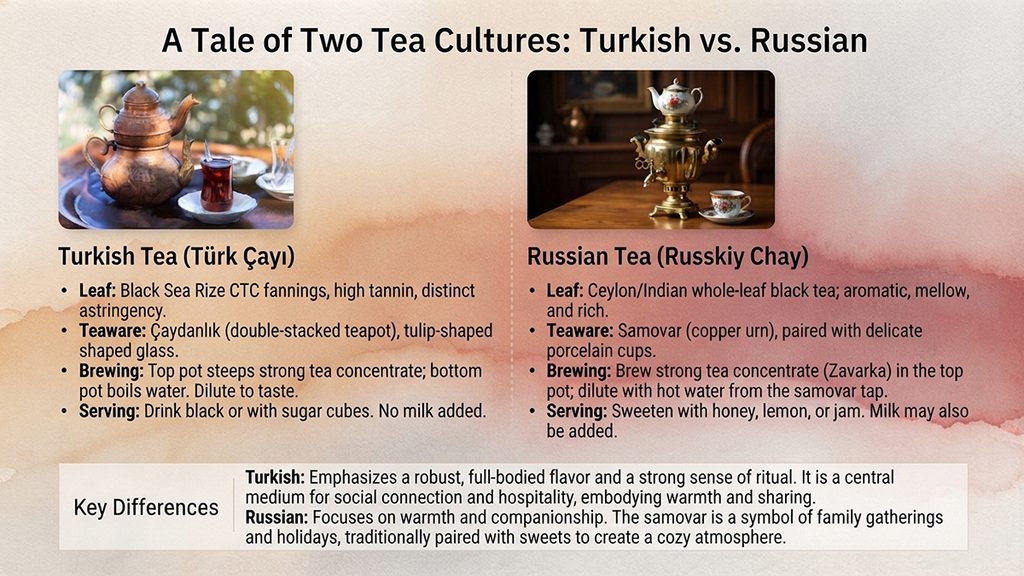
Rather than assuming all Turkish tea is CTC or finely broken tea, it is better to think of it simply as a robust style of Turkish black tea intended to produce a strong brew.
The Çaydanlık
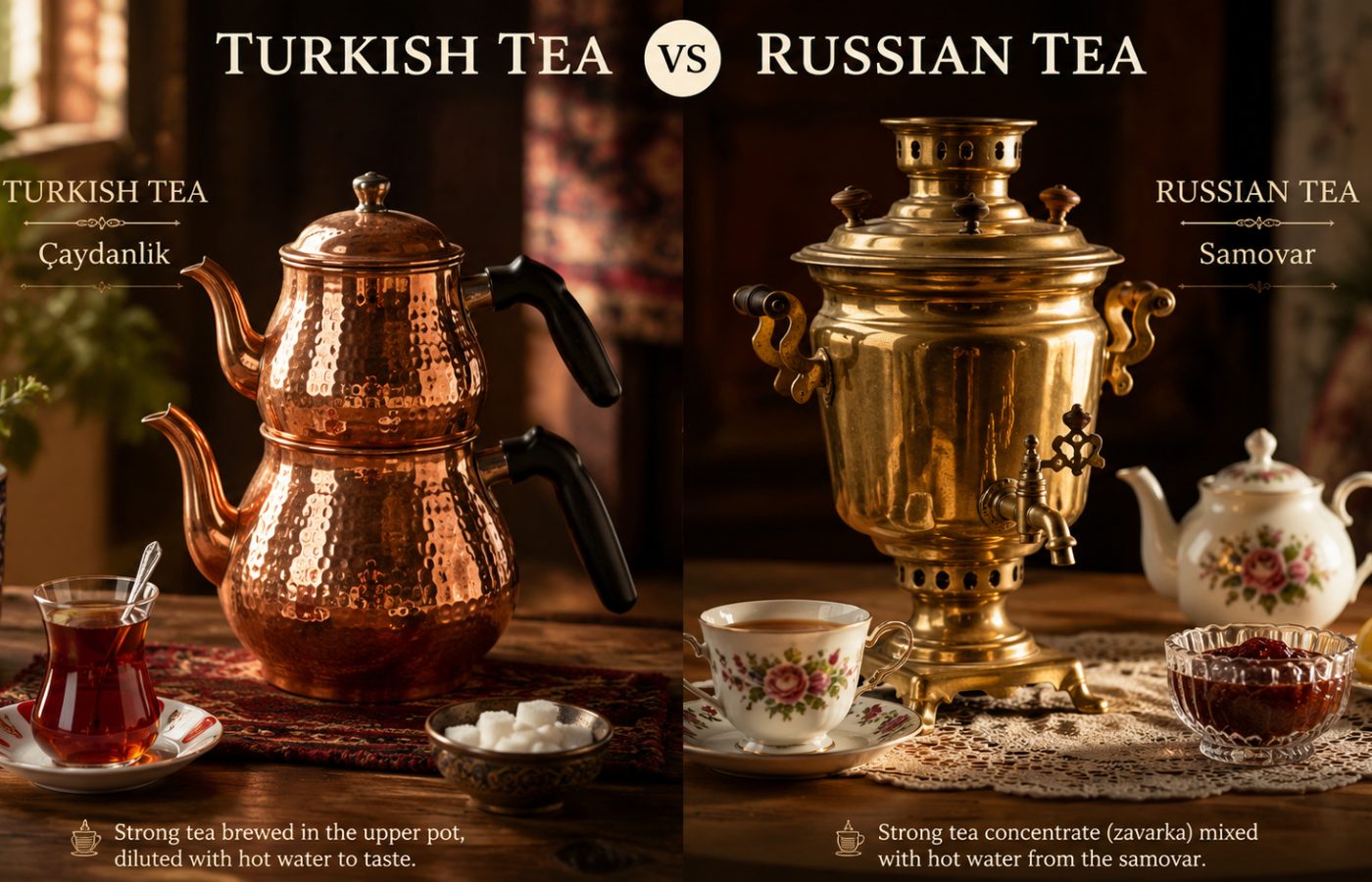
One of the most recognizable parts of Turkish tea culture is the çaydanlık, a pair of stacked teapots.
Water is heated in the larger bottom kettle. Black tea is brewed strongly in the smaller pot above it. When the tea is served, some concentrated tea is poured into the glass and then diluted with hot water from the lower kettle.
This allows each person to choose the strength of the cup.
A lighter tea may be described as açık—literally “light” or “open”—while someone wanting a darker, stronger glass can ask for a stronger preparation.
The Glass
Turkish tea is traditionally served in a small, narrow-waisted glass, often described as tulip-shaped.
The clear glass isn’t merely decorative. It allows the beautiful reddish-amber color of the tea to remain visible.
What Is Added?
Milk is generally not part of the traditional Turkish tea experience.
Sugar, however, is common. Sugar cubes may be served alongside the glass, while spices are not normally the defining feature of everyday Turkish çay.
What Does Turkish Tea Taste Like?
Expect a cup that can be:
- Strong
- Full-bodied
- Brisk
- Slightly astringent
- Deep reddish amber in color
Because the concentrated brew can be diluted at the table, the drinker has considerable control over strength.
Tea as Hospitality
Perhaps the most important ingredient is not in the teapot at all: conversation.
Tea is served throughout the day and is strongly associated with friendship, hospitality, and courtesy in Turkish culture.
2. Traditional Russian Tea: Zavarka and the Samovar
Russian tea culture developed along a very different historical path.
Tea reached Russia through trade with China and became increasingly important during the imperial period. For centuries, China played an especially important role in supplying tea to Russia.
One of the most recognizable symbols of Russian tea drinking eventually became the samovar.
What Is a Samovar?
A samovar is essentially a large vessel designed to keep water hot.
Traditional versions were heated with charcoal or wood. Later models used other fuels and eventually electricity.
The important distinction is that the tea itself is not normally brewed inside the samovar. The samovar supplies hot water.
A separate teapot holds a very strong tea concentrate known as zavarka.
A small amount of zavarka goes into the cup, followed by hot water from the samovar until the desired strength is reached.
That makes the basic idea surprisingly similar to Turkish tea even though the equipment and cultural traditions developed differently.
The Tea
Historically, Chinese tea played an enormous role in Russian tea culture. Later, teas from India, Sri Lanka, and other producing regions also became common.
There is therefore no single leaf style that defines all traditional Russian tea.
The central concept is the strong zavarka concentrate and hot-water dilution method, rather than one specific black tea origin.
Russian Tea Cups
Porcelain cups and saucers have long been associated with Russian tea tables.
Glass cups held inside decorative metal holders—known as podstakanniki—are another familiar symbol of Russian tea drinking, although they should not be treated as the only traditional way Russians drink tea.
What Is Served With Russian Tea?
Russian tea is closely connected with the foods and sweets surrounding it.
Traditional accompaniments can include:
- Sugar
- Honey
- Lemon
- Preserves or jam
- Candy
- Pastries
- Gingerbread and other sweets
One traditional method is to hold or bite a piece of sugar while sipping unsweetened tea rather than dissolving all of the sugar directly into the cup.
Russian tea drinking can therefore be as much about sitting around the table as it is about the beverage itself.
What Does Russian Tea Taste Like?
Because tea origins vary, there is no single Russian flavor profile.
A traditional Russian-style cup can generally be adjusted from relatively light to very strong using the zavarka. Lemon, honey, jam, or sugar can further transform the flavor.
The result is often less about following a rigid recipe and more about creating the cup you want while spending time at the table.
3. Iranian or Persian Tea: Chai
Tea has also become deeply embedded in Iranian hospitality and daily life.
Although Iran has its own tea-growing region near the Caspian Sea, imported tea has historically played an important role as well.
By the nineteenth century, the samovar had become part of Persian tea culture, particularly under Russian influence. Encyclopaedia Iranica describes black tea traditionally being brewed in a small teapot placed over a kettle or samovar.
How Persian Tea Is Brewed
The brewing arrangement may look familiar if you have already seen Turkish or Russian tea.
A small teapot contains strong black tea and is kept warm above a kettle or samovar. The concentrated tea is then poured into the glass and diluted with hot water.
The strength can be adjusted by changing the ratio of brewed tea to water.
Traditionally, Persian even has expressions describing tea according to its color: darker tea for a stronger cup and lighter-colored tea for a weaker one.
The Glass
Tea is traditionally served in small clear glasses called estekān.
As in Türkiye, the glass makes it easy to appreciate the beautiful reddish color of properly brewed black tea.
Sugar and Persian Tea
Sugar has historically been extremely important to Persian tea drinking.
A traditional technique is to place a piece of hard sugar in the mouth and sip the tea through it. Another option is simply to sweeten the tea directly. citeturn849873search0
Tea may also be served with sweets.
Lemon or lime appears in some regional traditions as well.
What About Cardamom, Rose Water, and Saffron?
This is an area where descriptions of Persian tea online can become overly simplified.
Cardamom, saffron, rose water, and other aromatic ingredients certainly appear throughout Persian cuisine and beverages, but plain black tea with sugar is also deeply traditional. It would be misleading to suggest that every authentic Iranian cup contains rose water, cardamom, or saffron.
Iranian tea traditions vary by household and region.
Tea and Hospitality
Tea is one of the classic beverages offered to guests in Iranian homes and has long played an important social role.
Historical accounts describe tea being kept readily available throughout the day and routinely offered to visitors. citeturn849873search4
So while drinking tea is an everyday habit, serving it is also a gesture of welcome.
Turkey vs. Russia vs. Iran: Why Are They So Easy to Confuse?
At first glance, all three traditions appear to follow nearly the same formula:
Strong tea + hot water = customized cup
And structurally, there really is a resemblance.
The important difference is that they belong to separate cultural traditions.
| Tradition | Main Brewing Equipment | Traditional Serving Style | Common Additions |
|---|---|---|---|
| Turkish | Çaydanlık | Small tulip-shaped glass | Sugar |
| Russian | Samovar + separate teapot | Cup, saucer, or glass holder | Sugar, lemon, honey, preserves |
| Iranian | Teapot over kettle or samovar | Small clear estekān glass | Sugar, sweets, regional additions |
The brewing concept overlaps. The history, presentation, preferred teas, and social customs do not.
4. British English Breakfast Tea
Cross from Türkiye, Russia, and Iran to Britain and the brewing philosophy changes considerably.
Instead of preparing a strong concentrate and diluting it glass by glass, British tea is generally brewed directly in a teapot or cup at approximately the strength at which it will be served.
What Is English Breakfast Tea?
Despite the name, English Breakfast is not one single tea variety.
It is a style of black tea blend.
Depending on the producer, it may contain teas from Assam, Sri Lanka, Kenya, or other growing regions. Blend recipes vary, but the goal is generally a strong, satisfying black tea suited to breakfast and capable of pairing well with milk.
Brewing
Loose tea or tea bags are steeped directly in hot water.
After the appropriate brewing time, the leaves are removed or the tea is poured from the pot.
There is normally no separate concentrated zavarka-style tea that must then be diluted with water.
Milk or No Milk?
Milk is strongly associated with British black tea, but it is not mandatory.
English Breakfast can be enjoyed:
- Plain
- With milk
- With sugar
- With milk and sugar
- Occasionally with lemon, although lemon and milk should not normally be combined
The choice is ultimately personal.
Flavor
Depending on the blend, English Breakfast can offer:
- Malt
- Toast
- Honey
- Wood
- Caramel
- Light fruitiness
- Briskness and astringency
A good breakfast blend should have enough body to remain flavorful after a small amount of milk is added.
The Cultural Style
Compared with Turkish or Persian service, British tea may look simpler from a brewing standpoint.
But the social rituals surrounding tea—from breakfast to afternoon tea—have become an equally recognizable part of British food culture.
5. Indian Masala Chai
If English Breakfast changes the brewing method, Indian masala chai transforms the entire recipe.
In the United States, people often use the word “chai” to mean a sweet, spiced milk tea.
But chai simply means tea in several languages. Asking for “chai tea” can therefore literally amount to saying “tea tea.”
Masala chai is more specific: masala refers to a mixture of spices.
The Tea
Strong black tea is commonly used because the tea needs enough body to remain noticeable alongside milk, sweetener, and aromatic spices.
Assam tea is particularly well suited to this purpose, and strong broken-leaf or CTC teas are commonly used in many modern preparations.
Brewing
This is where masala chai clearly separates itself from the first three traditions.
Instead of making a tea concentrate and diluting it with plain hot water, many masala chai recipes combine some or all of the following in a saucepan:
- Water
- Black tea
- Milk
- Sugar
- Spices
The mixture is heated and simmered according to the cook’s preferred method before being strained and served.
Recipes vary enormously from household to household.
The Spices
There is no single universal masala chai spice recipe.
Common choices include:
- Green cardamom
- Fresh ginger
- Cinnamon
- Cloves
- Black pepper
- Fennel
Some recipes use only one or two spices. Others use several.
That variation is part of the beauty of masala chai.
Milk and Sweetness
Milk is an essential feature of many popular masala chai preparations, and sweetness is common.
The strong tea, rich milk, sugar, and aromatic spices create a very different drinking experience from plain Turkish, Russian, Iranian, or British black tea.
Flavor
Masala chai can be:
- Rich
- Creamy
- Sweet
- Warming
- Spicy
- Aromatic
- Full-bodied
Yet the exact balance changes with every recipe.
Five Black Tea Traditions at a Glance
| Tea Culture | Tea Style | Brewing Method | Milk? | Typical Flavor Direction |
| Turkish Çay | Turkish black tea | Strong upper-pot brew diluted with hot water | Usually no | Strong, brisk, reddish amber |
| Russian Zavarka | Historically Chinese; later many origins | Strong teapot concentrate + samovar water | Sometimes | Customizable, aromatic, often served with sweets |
| Persian Chai | Black tea | Strong teapot brew + hot water | Usually no | Clear, aromatic, often sweet |
| English Breakfast | Black tea blend | Direct infusion | Common | Malty, brisk, full-bodied |
| Masala Chai | Strong black tea | Tea heated with milk, water and spices | Yes, commonly | Rich, sweet, creamy and spiced |
The Easiest Way to Remember Them
If five traditions seem like too much to remember, think of them this way:
Turkish tea:
Strong black tea + çaydanlık + tulip glass + sugar.
Russian tea:
Zavarka + samovar + a long table filled with tea and treats.
Persian tea:
Strong black tea + hot water + clear glass + sugar and hospitality.
English Breakfast:
Brew the tea directly + add milk if desired.
Indian masala chai:
Strong tea + milk + sugar + spices heated together.
One Word That Causes Plenty of Confusion: Chai
“Chai” is not inherently a name for cinnamon-cardamom milk tea.
Variations of the word for tea appear across many languages—including Persian, Russian, Turkish, Hindi, and others—because the word itself traveled across cultures along with tea and international trade.
In American cafés, however, “chai” has become shorthand for masala chai, which explains why many American tea drinkers automatically associate the word with milk and spices.
That is useful restaurant vocabulary, but it is not the whole story.
What These Five Tea Cultures Have in Common
The most interesting thing about comparing these traditions may not be their differences.
It is what they share.
Tea repeatedly became more than a beverage.
In Türkiye, a little glass of çay accompanies conversation.
Around a Russian samovar, tea historically encouraged people to remain at the table.
In Iranian homes, tea became an everyday expression of hospitality.
Britain built famous social rituals around the teapot.
Across India, chai became part of daily life at homes, workplaces, railway stations, restaurants, and roadside tea stalls.
The leaf may be black tea in every case, but culture changes everything that happens after the leaves enter the pot.
And that may be one of the best reasons to explore loose leaf tea: one plant can lead to hundreds of completely different traditions, flavors, and ways of sharing a cup.