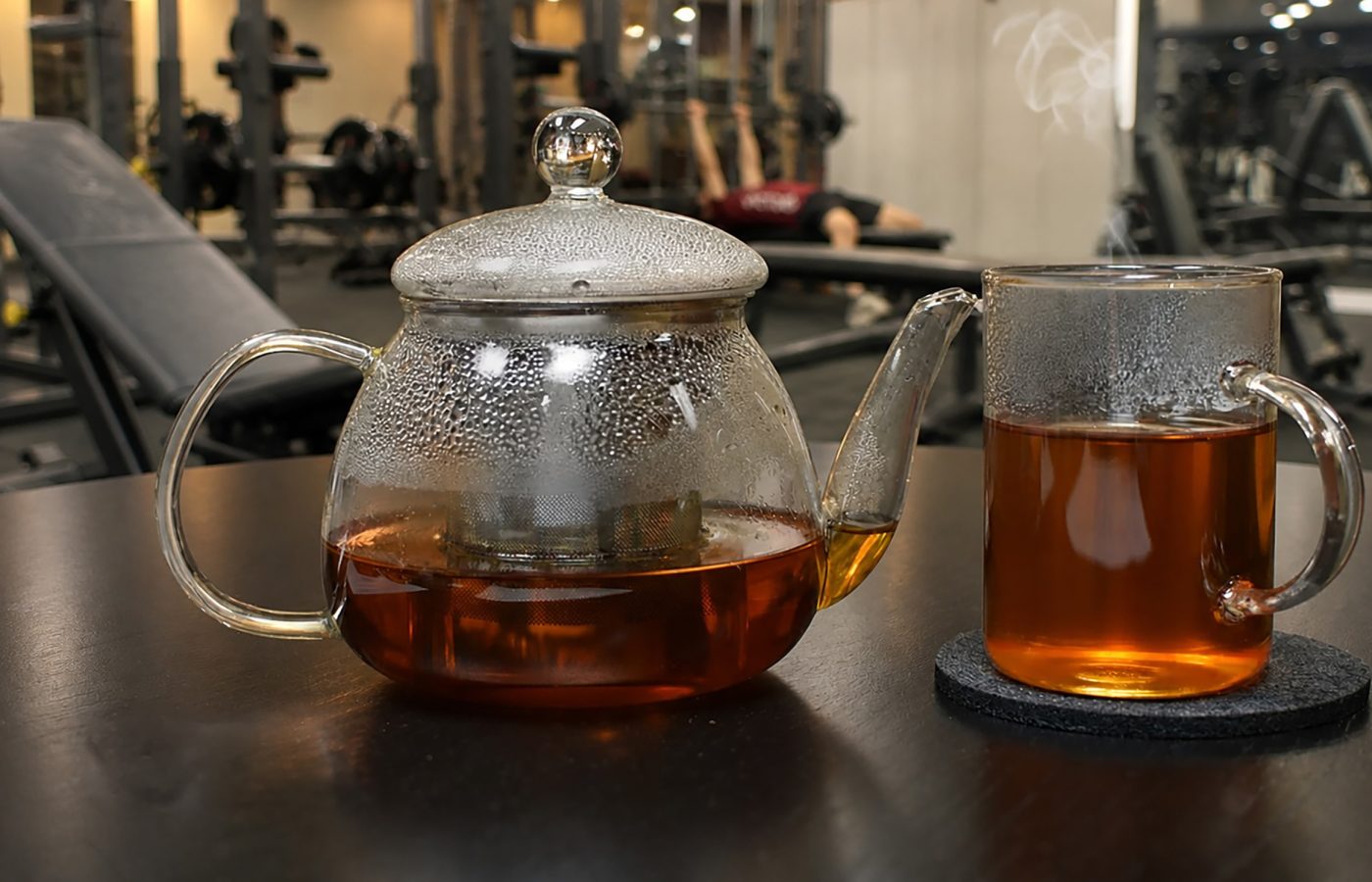
Tea and Exercise: What to Drink Before, During, and After Your Workout

Medical disclaimer: This article provides general information based on sports nutrition and medical research. It is not a substitute for individualized medical or nutrition advice. Caffeine tolerance and hydration needs vary. Consult a physician or registered dietitian before changing your routine if you are pregnant, take medication, have iron-deficiency anemia, or live with a heart, kidney, gastrointestinal, or other medical condition.
Tea and exercise are two healthy habits enjoyed by millions of people. But can drinking tea before a workout help you burn more fat? Does tea interfere with post-workout nutrition? And if it makes you urinate more often, does it still count toward hydration?
This guide examines how unsweetened green, oolong, and black tea may fit into your exercise routine. It also separates established science from common myths about caffeine, diuresis, hydration, and fat loss.
The Quick Answer
Short on time? Here are the essentials:
- Before exercise: Tea is generally fine if you tolerate caffeine, but avoid unusually strong brews or unfamiliar products.
- During exercise: Water is usually the simplest choice. Electrolytes may be useful during prolonged exercise, heavy sweating, or hot conditions.
- After exercise: Tea can contribute to your fluid intake, but water, electrolytes, food, and overall recovery should come first.
- For iron absorption: If you are at risk for iron deficiency, avoid drinking tea with an iron-rich meal. Waiting at least one hour may reduce its effect on nonheme iron absorption.
- The main principle: Pay attention to caffeine dose, brew strength, timing, and your personal response.
1. Drinking Tea Before a Workout: Benefits and Drawbacks
Potential benefits of caffeine
Tea contains caffeine, although the amount varies substantially depending on the tea, serving size, amount of leaf used, water temperature, and brewing time.
Caffeine may reduce perceived effort and improve certain aspects of endurance, strength, power, and high-intensity intermittent exercise. However, not everyone responds the same way.
Most performance studies use a measured caffeine dose—typically around 2 to 6 milligrams per kilogram of body weight taken 15 to 60 minutes before exercise. An ordinary cup of tea often provides much less caffeine and does not deliver a standardized dose. In other words, tea may provide a mild boost, but it should not be expected to work like a precisely dosed sports supplement. The NIH Office of Dietary Supplements provides additional guidance on caffeine and athletic performance.
What about green tea and fat burning?
Green tea contains catechins, including EGCG, as well as caffeine. These compounds may have modest effects on energy expenditure or fat metabolism, but drinking green tea does not produce dramatic fat loss.
According to the National Center for Complementary and Integrative Health, any effect of green tea products on body weight is likely to be modest and can vary by product and individual.
For meaningful, lasting fat loss, total calorie intake, food quality, regular activity, resistance training, sleep, and consistency matter far more than any single beverage.
Possible drawbacks
Tea may cause problems before exercise if you are sensitive to caffeine or drink a strong brew.
Potential effects include:
- Jitters, anxiety, or a racing heartbeat
- Acid reflux, nausea, or stomach discomfort
- An urgent need to urinate or have a bowel movement
- Headaches in caffeine-sensitive individuals
- Disrupted sleep after an afternoon or evening workout
Caffeine can mildly increase urine production at rest, particularly in people who do not consume it regularly. However, research does not support the claim that moderate caffeine intake causes harmful dehydration during exercise. A meta-analysis of caffeine and diuresis found that the diuretic effect was small at rest and largely absent during exercise.
A practical pre-workout approach
If you enjoy tea before training:
- Choose a familiar tea and brew it normally.
- Try 8 to 12 fluid ounces about 30 to 60 minutes before exercise.
- Avoid making it much stronger than usual.
- Do not use tea as your only source of fluid.
- Consider having it with a light snack if tea bothers your stomach.
- Count caffeine from coffee, energy drinks, pre-workout products, and medications—not just tea.
- Test your routine during training before using it for a race or competition.
2. Can You Drink Tea Immediately After Exercise?
There is no universal rule requiring healthy adults to wait 30 to 60 minutes before drinking tea after a workout. Moderate tea intake does not automatically prolong dehydration.
However, after a sweaty or strenuous session, your immediate priorities should be:
- Replacing lost fluid
- Replacing sodium and other electrolytes when appropriate
- Eating enough protein and carbohydrates to support recovery
- Cooling down and allowing your heart rate to return toward normal
Tea can be part of that process, but it may not be the most practical first drink if you need to replace a large amount of sweat. Water is often sufficient after shorter, less strenuous workouts. An electrolyte-containing beverage may be more useful after prolonged exercise, heavy sweating, or training in hot conditions.
Hydration needs are highly individual. The National Athletic Trainers’ Association position statement recommends developing a personalized plan that replaces enough fluid without encouraging excessive drinking.
Tea and iron absorption
Tea polyphenols can reduce the absorption of nonheme iron, the type found mainly in plant foods and fortified products. This matters most for people who have low iron stores, follow a largely plant-based diet, menstruate heavily, or participate in high-volume endurance training.
Tea does not “block” all nutrients, and healthy people with adequate iron stores do not necessarily need to avoid it at every meal. However, people at risk for iron deficiency may benefit from drinking tea between meals.
A controlled trial found that waiting one hour after an iron-containing meal reduced tea’s inhibitory effect on nonheme iron absorption. You can review the study through the American Journal of Clinical Nutrition and PubMed.
A practical post-workout approach
- Start replacing fluid soon after training.
- Use an electrolyte drink when sweat losses, workout length, or environmental conditions justify it.
- Eat a balanced recovery meal or snack.
- Enjoy tea whenever it feels comfortable.
- If iron absorption is a concern, separate tea from iron-rich meals or supplements by at least one hour.
- Avoid a large caffeine dose late in the day if it could interfere with sleep.
Although tea contains antioxidants, one cup should not be treated as a proven muscle-recovery treatment. Sleep, nutrition, hydration, and an appropriate training plan remain much more important.
3. Common Myths About Tea and Exercise
Myth 1: Tea doubles fat burning during exercise
The reality: Tea may produce a small metabolic effect, but it does not override calorie balance. It cannot compensate for an inconsistent diet or exercise routine.
Myth 2: Drinking tea before a workout causes dehydration
The reality: Moderate amounts of caffeinated tea contribute to fluid intake. Caffeine may slightly increase urine production in some situations, but this does not usually result in net dehydration during exercise.
Sweat rate, workout intensity, heat, humidity, clothing, exercise duration, and starting hydration status generally matter more.
Myth 3: Drinking tea damages your kidneys
The reality: Moderate consumption of normally brewed tea is not inherently harmful to healthy kidneys. However, people with chronic kidney disease, a history of certain kidney stones, or prescribed fluid or mineral restrictions should ask a health professional what is appropriate for them.
Tea should not be promoted as either a kidney-damaging beverage or a kidney “cleanse.”
Myth 4: Urinating after tea means your body is detoxing
The reality: More frequent urination mainly reflects fluid intake, caffeine’s mild effects on the kidneys, and individual bladder sensitivity. It is not evidence that tea is selectively removing toxins.
Your liver and kidneys continuously process and remove metabolic waste. No ordinary tea can replace those functions.
4. Why Does Tea Make Some People Urinate More?
Caffeine blocks adenosine receptors in several parts of the body. In the kidneys, this can influence sodium handling and lead to a mild increase in urine production, particularly at rest.
Several factors affect how noticeable this response is:
- Your usual caffeine intake
- The amount of caffeine consumed
- Serving size
- Brewing strength
- How recently you last urinated
- Your hydration status
- Bladder sensitivity
- Stress or pre-workout anxiety
- Whether you are resting or exercising
Tea also contains small amounts of related compounds such as theophylline and theobromine. However, caffeine is the main compound relevant to ordinary tea consumption, and theophylline should not be presented as the primary reason tea causes frequent urination.
Does green tea cause more urination than black or oolong tea?
Not necessarily.
It is tempting to rank green, oolong, and black tea by “diuretic strength,” but tea category alone does not reliably predict caffeine exposure. The final caffeine content depends heavily on the leaf, portion size, brewing temperature, steeping time, and number of infusions.
A strongly brewed black tea may contain more caffeine than a lightly brewed green tea, and the reverse may also be true. Your personal response is more useful than a rigid ranking by tea type.
If caffeine causes problems, try:
- A smaller serving
- Fewer tea leaves
- A shorter steep
- Decaffeinated tea
- A caffeine-free herbal infusion
Remember that herbal infusions are not made from the traditional tea plant, Camellia sinensis, and their ingredients and effects vary.
5. Does Tea Count Toward Daily Hydration?
Yes. Unsweetened tea contributes to your total daily fluid intake.
There is no scientifically established rule requiring you to count only 60%, 70%, or 80% of the tea you drink. Those precise “effective hydration” formulas are not supported as universal nutrition standards.
If you drink 12 fluid ounces of tea, all 12 ounces contribute fluid. Your body may not retain every ounce—just as it does not retain every ounce of plain water—but there is no need to apply an automatic discount.
That does not mean tea should replace all your water. Plain water remains:
- Caffeine-free
- Calorie-free
- Inexpensive
- Easy on most stomachs
- Convenient during exercise
- Unlikely to interfere with sleep
Instead of using a fixed tea-to-water ratio, monitor your overall fluid intake and adjust for your workout, climate, sweat rate, diet, and medical needs.
For longer or hotter sessions, weighing yourself before and after exercise can help estimate sweat losses. Avoid trying to gain weight during exercise by drinking excessively, since overhydration can also be dangerous.
6. Practical Advice for Tea Drinkers Who Exercise
Endurance training
A moderate serving of tea before running or cycling is usually fine if you tolerate it. During longer sessions, choose a drink that makes it easy to replace fluid and, when needed, carbohydrates and electrolytes.
Strength training
Tea before or after lifting is generally acceptable. It does not meaningfully prevent your body from using dietary protein. If you are at risk for iron deficiency, avoid pairing tea with an iron-rich post-workout meal—particularly one that depends heavily on plant-based iron.
Caffeine-sensitive individuals
Skip pre-workout tea or choose decaffeinated tea if caffeine causes:
- Palpitations
- Shaking or anxiety
- Reflux or nausea
- Headaches
- Sleep problems
- Frequent or urgent urination
Daily caffeine intake
For most healthy adults, the FDA cites 400 milligrams of caffeine per day as an amount not generally associated with negative effects. That is an upper reference point, not a goal, and some people experience side effects at much lower amounts. See the FDA’s caffeine guidance for details.
Your daily total should include caffeine from tea, coffee, soda, chocolate, energy drinks, supplements, and medications.
The Bottom Line
You do not have to choose between enjoying tea and maintaining a healthy exercise routine.
Tea before or after a workout is generally fine when you:
- Keep the caffeine dose within your personal tolerance
- Avoid unusually strong tea before intense exercise
- Use water or an appropriate sports drink to meet workout-specific hydration needs
- Separate tea from iron-rich meals if iron absorption is a concern
- Avoid late-day caffeine when it disrupts sleep
- Treat tea as a beverage—not a fat burner, detox treatment, or substitute for a balanced recovery plan
The best routine is the one that supports your hydration, digestion, sleep, nutrition, and training consistently.
Final medical disclaimer: This article is intended for general educational purposes and does not diagnose, treat, or prevent any medical condition. Tea and caffeine cannot replace medication, professional weight-management care, or individualized hydration and nutrition planning. Stop exercising and seek appropriate medical care if you experience chest pain, fainting, severe shortness of breath, confusion, or other concerning symptoms. Consult a qualified health professional if you have a medical condition, take medication, are pregnant or breastfeeding, or have concerns about caffeine, iron status, or hydration.