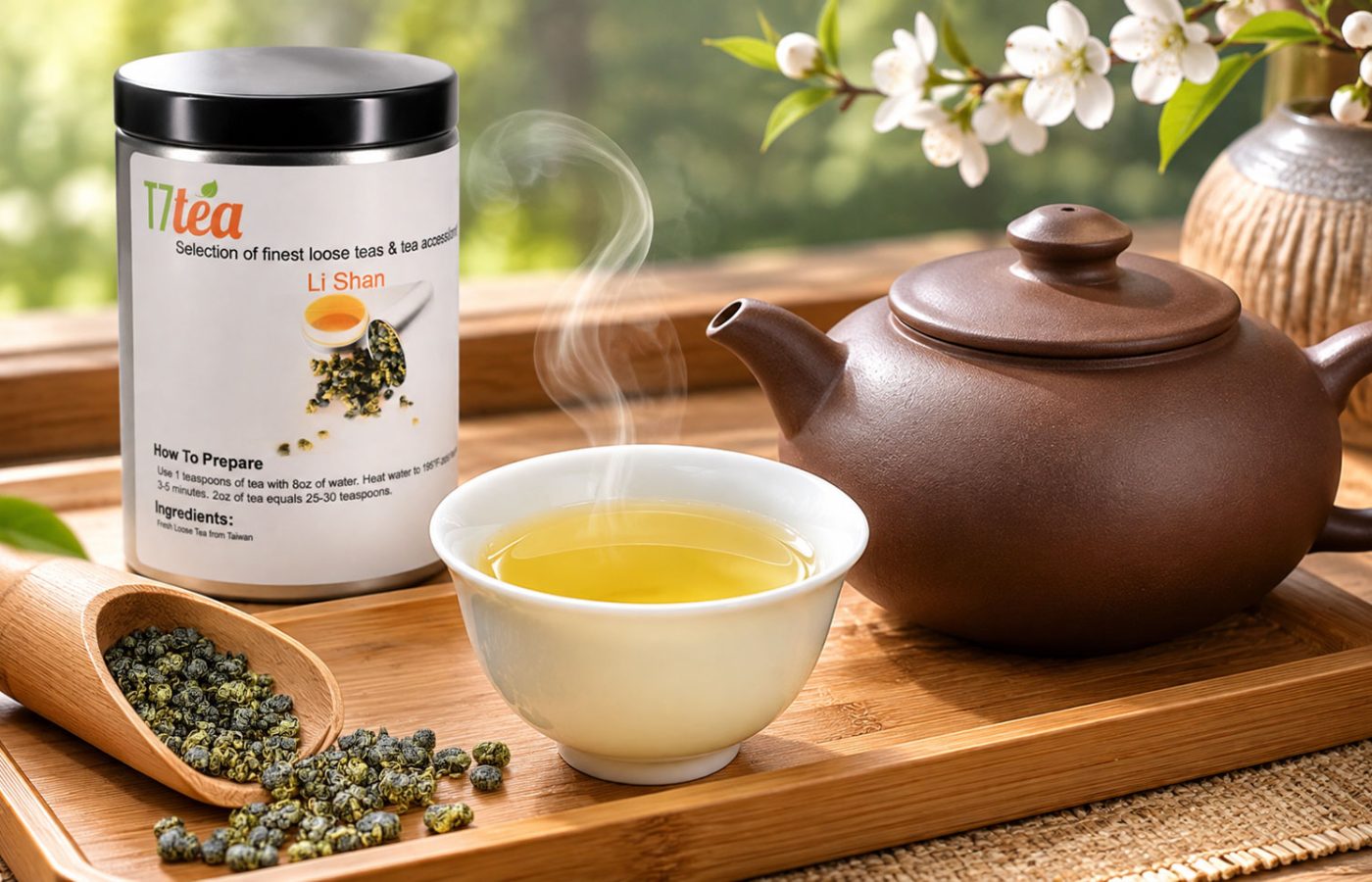
An Unexpected Li Shan Oolong Experiment: Is There Really a Right Way to Brew Tea?

Sometimes the most memorable tea experiences don’t come from following the perfect brewing instructions. They come from an unexpected mistake.
One day, while preparing a pot of Li Shan Oolong, I forgot there was still warm water in the teapot. Without thinking, I added the tea leaves.
Normally, I would have started over. But this time, I decided to leave everything as it was.
I let the tightly rolled tea leaves rest quietly in the warm water, allowing them to open gradually. After enjoying that first gentle infusion, I added freshly boiled water and continued brewing the same leaves.
The moment I took my first sip of the second infusion, I noticed something different.
It was still the familiar Li Shan Oolong I enjoyed, but its character had changed.
And that small accident became an unexpectedly interesting tea experiment.
Two Brewing Methods, Two Different Experiences
Li Shan Oolong is a celebrated Taiwanese high-mountain tea, known for its elegant floral aroma, delicate sweetness, and smooth, refreshing character.
Typically lightly oxidized and often minimally roasted, Li Shan Oolong has a naturally refined flavor that makes it especially enjoyable across multiple infusions.
When brewed directly with hot water, the tightly rolled leaves begin to unfurl, releasing their distinctive fragrance.
The floral notes become lively and expressive. The tea liquor feels bright and clean, with a gentle sweetness that lingers after each sip.
This is the familiar character that makes Li Shan Oolong so appealing.
But my accidental warm-water experiment revealed another side.
Rather than immediately exposing the dry leaves to high temperatures, the warm water allowed them to hydrate and begin opening more slowly.
The first infusion was gentle and subtle.
When I later added hotter water, I noticed that the resulting tea had a softer, rounder character. The floral aroma seemed less pronounced, while the sweetness and smooth texture became more noticeable.
The tea felt calmer, almost as though its personality had shifted.
It wasn’t necessarily better or worse.
It was simply different.
Why Does Water Temperature Change the Flavor of Oolong Tea?
Water temperature plays an important role in how tea compounds are extracted.
Hotter water generally speeds up extraction, helping release aromatic compounds, caffeine, polyphenols, amino acids, and other substances that contribute to tea’s flavor and mouthfeel.
Lower-temperature water usually extracts these compounds more slowly, although the exact results depend on the tea leaves, steeping time, and brewing conditions.
In my experiment, the initial warm-water infusion may have changed the balance of compounds available during the later hot-water infusion.
It also gave the tightly rolled leaves time to hydrate before the next steep.
Together, these factors may help explain why I experienced a smoother texture, a softer floral aroma, and a different balance of sweetness.
That doesn’t mean warm water automatically removes bitterness or preserves sweetness for later. Tea extraction is more complicated than that.
What matters here is what I experienced in the cup.
The same tea leaves, prepared differently, offered a noticeably different tasting experience.
And that was enough to make me curious.
Try This Li Shan Oolong Brewing Experiment at Home
One of the pleasures of loose-leaf tea is discovering how small adjustments can change the experience.
If you enjoy Taiwanese high-mountain oolong, try comparing these two approaches using the same tea.
Method 1: Traditional Hot-Water Brewing
- Use approximately 3 grams of Li Shan Oolong per 8 ounces of water.
- Heat the water to around 195–205°F.
- Steep for approximately 2–3 minutes.
- Pour out the infusion completely and observe the aroma, sweetness, texture, and finish.
Method 2: Warm-Water First Infusion
- Use the same amount of Li Shan Oolong in a separate teapot.
- Add warm water at approximately 120–140°F.
- Allow the leaves to steep for about 2 minutes.
- Pour out and taste the first warm infusion.
- Add fresh water at 195–205°F to the same leaves.
- Steep for approximately 2 minutes, then taste again.
These are suggested starting points for experimentation, not fixed rules.
Compare the floral fragrance, sweetness, astringency, mouthfeel, and lingering aftertaste. You may find differences similar to mine—or discover something entirely different.
Remember that the second method includes an additional infusion, so the comparison is not solely about water temperature. The first steep also changes what remains in the leaves.
That’s part of what makes the experiment interesting.
Is There Really a Correct Way to Brew Tea?
We often search for the perfect brewing method.
The ideal water temperature. The exact steeping time. Whether to rinse the leaves. How quickly to pour.
These details matter, especially when we are learning to appreciate a new tea.
But I don’t believe they should become restrictions that prevent us from enjoying the experience.
Brewing guidelines are useful starting points, not absolute rules.
Li Shan Oolong is naturally delicate and refined rather than heavy or overpowering. One brewing approach may highlight its lively floral fragrance, while another may bring attention to its smooth texture and gentle sweetness.
Neither experience needs to be declared the winner.
Sometimes the better cup is simply the one that suits us at that particular moment.
Sometimes Tea Reflects Our State of Mind
I’ve noticed that my enjoyment of tea isn’t determined by brewing technique alone.
My mood matters, too.
When I’m relaxed and peaceful, I can appreciate the bright floral character of a traditional infusion just as much as the softer, more mellow flavor of a slowly brewed cup.
Both have their own charm.
But on a difficult or frustrating day, my reaction might be different.
A tea that tasted wonderful yesterday may not feel quite right today.
I’m not someone who becomes upset simply because a cup of tea doesn’t meet my expectations.
At most, I might feel a quiet sense of disappointment and think:
This cup just isn’t the flavor I was hoping for today.
And that’s perfectly fine.
Tea is surprisingly honest.
It reveals its own character through aroma, flavor, and texture. At the same time, our experience of drinking it can reflect our mood, expectations, and state of mind.
Perhaps that’s why the same tea can feel different from one day to another.
The Beauty of an Unexpected Cup
Brewing tea reminds me of something about life.
We often want everything to follow a plan. We measure, calculate, and try to get every detail just right.
But not every meaningful experience comes from doing things perfectly.
Sometimes an unexpected change introduces us to something we might never have discovered otherwise.
My accidental warm-water infusion of Li Shan Oolong may not become my everyday brewing method.
I still appreciate the bright floral aroma that comes from a traditional hot-water infusion.
But that little mistake reminded me that even a familiar tea can have more than one expression.
And sometimes, instead of correcting an unexpected moment, it’s worth seeing where it leads.
After all, the pleasure of drinking tea isn’t always about finding the perfect cup. Sometimes it’s about appreciating the cup in front of us.
Explore Li Shan Oolong at T7 TEA
Curious about the delicate floral character of Taiwanese high-mountain tea?
Explore Li Shan Oolong at T7 TEA and discover how different brewing approaches can bring out new dimensions of this remarkable tea.
Whether you prefer a bright, fragrant infusion or a softer, more mellow cup, take your time and enjoy the experience.
Because every cup of tea has a story—and sometimes the unexpected ones are the most memorable.